
Identify and Overcome Project Management Bottlenecks in Your Startup
Eliminate Project Roadblocks: A Startup's Guide to Identifying and Overcoming Bottlenecks
Are project delays holding back your product’s growth? In the fast-paced world of startups, even minor delays can snowball into significant setbacks. Unidentified bottlenecks in project management often lead to missed deadlines, frustrated team members, and stalled progress.
Investopedia defines bottlenecks as a point of congestion in a production system (such as an assembly line or a computer network) that stops or severely slows the system. The inefficiencies brought about by the bottleneck often create delays and higher production costs.
Bottlenecks in a workflow can be either short-term or long-term, depending on how much each stage can handle and the volume of work passing through.
Short-term bottlenecks: are usually temporary and occur when there's an unexpected surge in the workload entering a process.
Long-term bottlenecks: tend to persist over longer periods and might happen repeatedly. This often results from a flaw in the process design or a misjudgment of how much work a particular stage can manage.
Startups are often in a race against time and resources to establish themselves in the market. Identifying bottlenecks related to the development, launch, or improvement of their product or service is crucial to operate efficiently, deliver high-quality products or services, and achieve sustainable growth in a competitive market.
Resolving issues early often requires less effort and expense than fixing problems later in the development cycle, helping to avoid costly overruns and rework. Here are three key steps to help you identify bottlenecks.
A Four-Step Plan to Streamline Your Projects
Map Out Your WorkflowDocument each step of your project processes to gain a clear overview of how tasks flow from start to finish. Flow charts are easy to follow, mapping out the process this ways makes it easier to locate problem areas.If you already know there are delays in a specific project, you might want to trace back the steps taken to find in which step is the bottleneck located.
Identify Repeated DelaysAnalyze your workflow map to spot stages where tasks consistently slow down or accumulate. Look for patterns such as missed deadlines, frequent bottlenecks at specific points, or tasks that require more time than anticipated. Gathering data from past projects can provide insights into these recurring issues
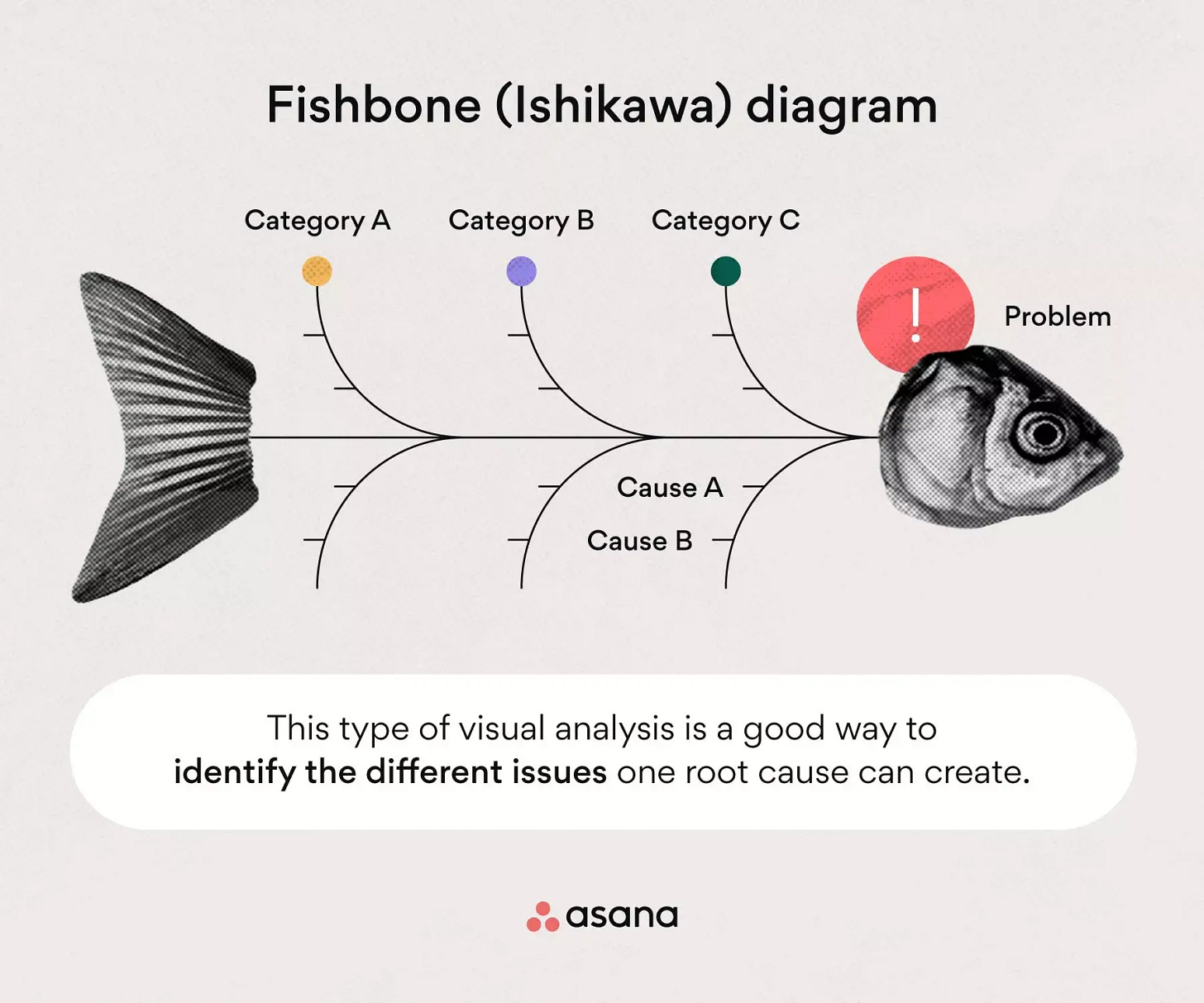
Analyze Root CausesDive deep into understanding why these delays are happening. Are they due to insufficient resources, like understaffed teams or lack of necessary tools? Perhaps unclear responsibilities are causing confusion, or inefficient communication channels are leading to misunderstandings. Engaging with your team to get their perspectives can uncover hidden obstacles.The fishbone diagram (Ishikawa diagram) is a great analysis tool for problem solving. The head of the fish represents the issue or bottleneck you’re trying to solve. The ribs represent different categories and tasks.
Implement Targeted SolutionsDevelop specific strategies to address each identified bottleneck. This might involve reallocating resources to balance workloads, redefining roles to ensure clarity, or introducing new tools to enhance efficiency. For example, changing deadlines or arranging steps in a process can facilitate faster work. Regularly review the impact of these changes and be prepared to make adjustments as needed.
By not identifying and addressing bottlenecks, you risk facing severe negative consequences such as prolonged project timelines, escalating costs, and frustrated team members. These issues can lead to missed market opportunities, reduced competitive advantage, and even the potential failure of the startup. Unresolved bottlenecks create stress and overwork, causing key talent to leave and leaving the remaining team overwhelmed.
Optimizing your workflows allows for better use of resources, enabling you to allocate time, budget, and talent where they're needed most. Tasks will flow seamlessly from one stage to the next, reducing delays and boosting overall efficiency. Your team will become more productive, focusing on meaningful work rather than getting bogged down by recurring issues, which leads to faster project completion. This not only enhances the quality of your products or services but also fosters a happier, more collaborative work environment.
PS: Our team at Apptimist Studio helps businesses with the planning, design, and execution of their plans. We help business owners and people with vision to execute their dreams and have beautiful, flawlessly working automated systems. Book a free discovery call with us here or connect with me on LinkedIn.
Work With AI!
Ready to delve deeper into the root causes of your project's bottlenecks? Challenge yourself to execute this step using this AI prompt:
Assist me in creating a detailed Ishikawa (fishbone) diagram to identify and categorize potential causes of bottlenecks in my project's workflow. [description of the product], [give information that is related to the problem, this could be technology used, environment, people, management software, etc] [Explain in detail what the problem is about] Focus on key categories such as People, Processes, Technology, Materials, Environment, and Management, and provide specific examples relevant to startup operations under each.
Here's a sample of how AI might respond:
Use this prompt with your preferred AI tool to visualize the underlying issues and start implementing effective solutions today.